
PowerFlex 4M Drive Manual: A Comprehensive Guide
This manual details the PowerFlex 4M adjustable frequency AC drive, covering installation, configuration, operation, and troubleshooting for optimal performance and efficiency.
It supports ratings from 0.2 to 11 kW, offering versatile control via Volts/Hertz and slip compensation, alongside extensive communication options.
Utilizing DIN rail mounting and feed-through wiring, this guide ensures a streamlined experience, reducing energy costs and mechanical wear for diverse applications.
The PowerFlex 4M adjustable frequency AC drive represents a robust and versatile solution for a wide spectrum of motor control applications. Designed and manufactured by Allen-Bradley, now Rockwell Automation, this drive caters to power ratings spanning 0.2 to 11 kW (0.25 to 15 Hp) across 120V, 240V, and 480V configurations.
Its core functionality centers around precise motor speed and torque control, achieved through advanced techniques like Volts per Hertz (V/Hz) control and slip compensation. These features enable optimized performance tailored to specific application demands, minimizing energy consumption and reducing mechanical stress on connected equipment.
The PowerFlex 4M isn’t merely a drive; it’s a comprehensive system designed for ease of integration and operation. An integral RS485/DSI port facilitates multi-drive networking, while a broad array of optional communication cards – including DeviceNet, EtherNet/IP, and PROFIBUS DP – provide seamless connectivity to industrial control systems. This manual serves as your guide to unlocking the full potential of this powerful drive.
Understanding the PowerFlex 4M Drive
The PowerFlex 4M AC drive is engineered as a compact, low-voltage solution for controlling AC induction motors. It functions by modulating the frequency and voltage supplied to the motor, enabling precise speed and torque regulation. This drive excels in applications demanding variable speed control, energy optimization, and improved process efficiency.
Key to its operation is the drive’s ability to adapt to diverse motor characteristics and load requirements. Through parameter programming, users can customize the drive’s behavior to match specific application needs, utilizing features like V/Hz control and slip compensation. The integral keypad provides a user-friendly interface for local control and monitoring.
Furthermore, the PowerFlex 4M’s architecture supports extensive communication capabilities; The built-in RS485/DSI port allows for networking, while optional cards extend connectivity to protocols like DeviceNet and EtherNet/IP, facilitating integration into larger automation systems. Understanding these core principles is crucial for effective implementation.
Key Features and Benefits
The PowerFlex 4M drive delivers a compelling suite of features designed to enhance performance and reduce operational costs. Its power ratings, spanning 0.2 to 11 kW, cater to a broad spectrum of applications, while Volts per Hertz and slip compensation ensure optimal motor control under varying load conditions.
A significant benefit is its potential for energy savings and minimized mechanical wear. Precise speed control reduces stress on machinery, extending its lifespan and lowering maintenance requirements. The integrated RS485/DSI port enables multi-drive networking, simplifying system architecture and communication.
Flexibility is further enhanced by a wide array of communication option cards, including DeviceNet, EtherNet/IP, and PROFIBUS DP. Installation is streamlined through DIN rail mounting and feed-through wiring, making retrofitting and upgrades remarkably efficient. These features combine to offer a robust and adaptable drive solution.
Installation and Mounting
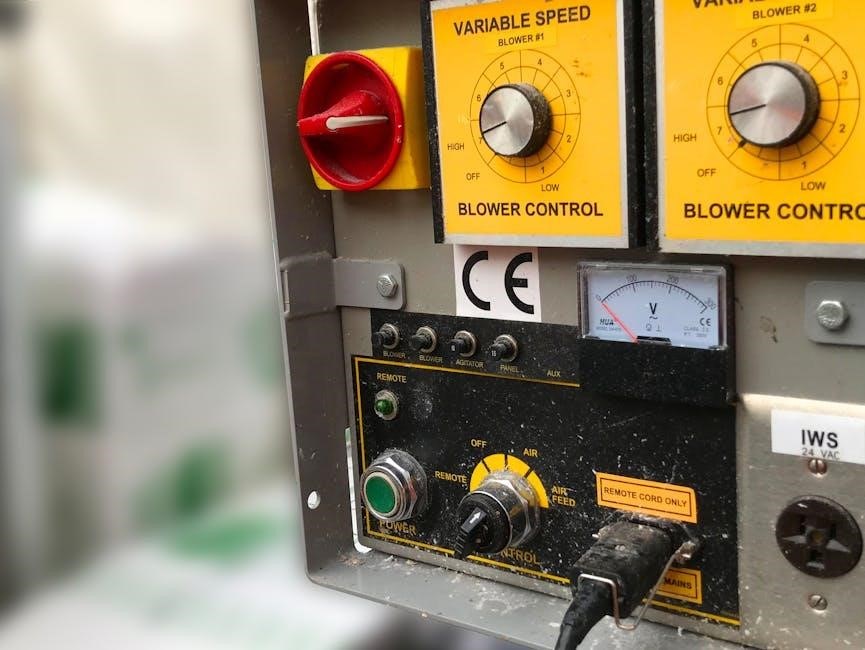
Proper installation involves unpacking, inspection, and secure DIN rail mounting, utilizing A and B frame drives for flexibility and ease of integration.
Careful wiring considerations, including input, output, and control connections, are crucial for reliable operation and long-term performance.
Unpacking and Inspection
Upon receiving your PowerFlex 4M drive, carefully inspect the shipping carton for any signs of damage incurred during transit. If damage is evident, immediately file a claim with the carrier before proceeding with unpacking.
Once the carton is opened, verify that the drive itself is free from physical damage, such as cracks, dents, or loose components. Compare the received unit against the packing list to ensure all ordered items are present, including any optional accessories or documentation.
Check for any loose hardware within the drive enclosure. If anything appears amiss, do not attempt to power on the drive. Contact Rockwell Automation support for assistance. Retain all packaging materials for potential return or warranty claims. Thorough inspection prevents issues later.
DIN Rail Mounting Procedure
The PowerFlex 4M drive is designed for flexible, time-saving installation utilizing standard DIN rail mounting. First, ensure the DIN rail is securely mounted to a suitable surface, capable of supporting the drive’s weight.
Next, position the drive above the DIN rail, aligning the mounting clips on the drive’s rear panel with the rail. Apply firm, even pressure to snap the drive securely onto the rail. Verify the drive is firmly attached and does not wobble.
For A and B frame drives, this method offers a streamlined installation process. Ensure adequate clearance around the drive for proper ventilation and wiring access. Proper mounting minimizes vibration and ensures reliable operation.
Wiring Considerations
Proper wiring is crucial for safe and reliable operation of the PowerFlex 4M drive. Always disconnect power before commencing any wiring activities. Utilize appropriately sized conductors, adhering to local and national electrical codes.
Ensure all connections are tight and secure to prevent overheating and voltage drops. Consider using wire lugs for a more robust connection. Implement proper grounding techniques to minimize electrical noise and ensure personnel safety.
Feed-through wiring simplifies retrofitting, allowing for easy connection of input and output cables. Separate control wiring from power wiring to prevent interference. Carefully plan wire routing to avoid strain and damage.
Input Power Wiring
Input power wiring for the PowerFlex 4M requires careful attention to voltage ratings and conductor sizing. Verify the drive’s input voltage matches the available supply – options include 120V, 240V, and 480V. Use appropriately gauged wire, considering both current capacity and voltage drop over the cable length.
Connect the input power lines to the designated terminals, ensuring proper phase sequence (A, B, C). Implement a properly sized overcurrent protection device (circuit breaker or fuse) upstream of the drive.
Always include a disconnecting means within sight of the drive for emergency shut-off and maintenance. Ground the drive enclosure securely to minimize electrical noise and ensure personnel safety. Double-check all connections before applying power.
Output Power Wiring
Output power wiring connects the PowerFlex 4M to the driven motor, demanding precise adherence to safety guidelines and motor specifications. Utilize motor-rated cable, sized appropriately for the motor’s full-load amps and the cable length to minimize voltage drop.
Connect the output phases (U, V, W) to the corresponding motor terminals, ensuring correct phase matching. Consider using a line reactor or output filter to reduce harmonic distortion and improve motor performance.
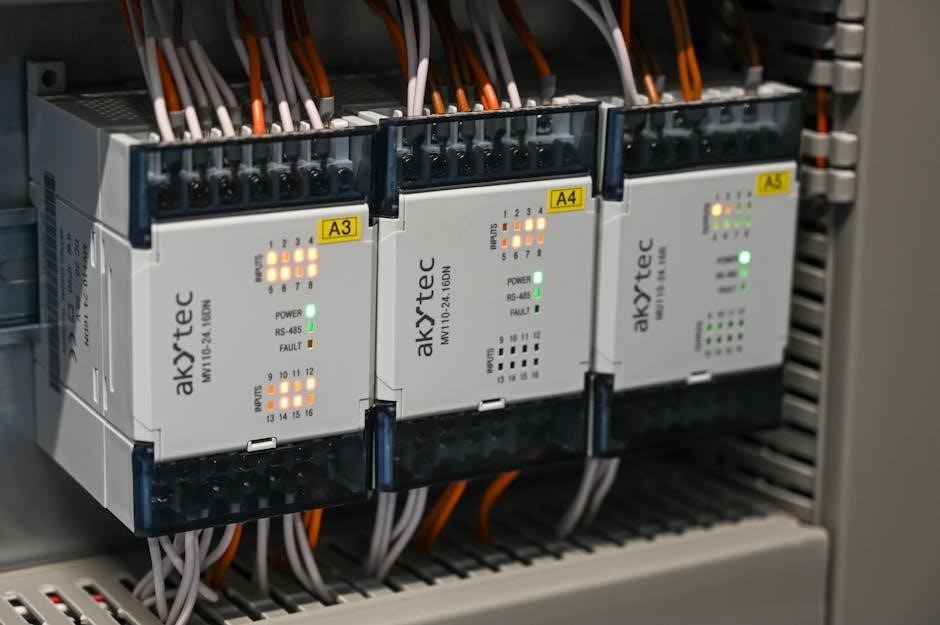
Implement overload protection, typically through motor-rated overload relays, to safeguard the motor from damage. Ground the motor frame properly for safety. Verify all connections are secure before energizing the system.
Control Wiring
Control wiring establishes communication between the PowerFlex 4M and external devices, enabling start/stop commands, speed references, and feedback signals. Utilize shielded control cable to minimize noise interference, especially in electrically noisy environments.
Connect digital inputs for functions like start, stop, forward, reverse, and enable. Analog inputs are used for speed references (0-10V, 4-20mA). Digital outputs can signal drive status or fault conditions.
Properly terminate the shield at the drive end to ensure effective noise immunity. Consider using optocouplers to isolate control signals. Refer to the drive’s wiring diagrams for specific terminal assignments and voltage levels.
Drive Configuration and Programming
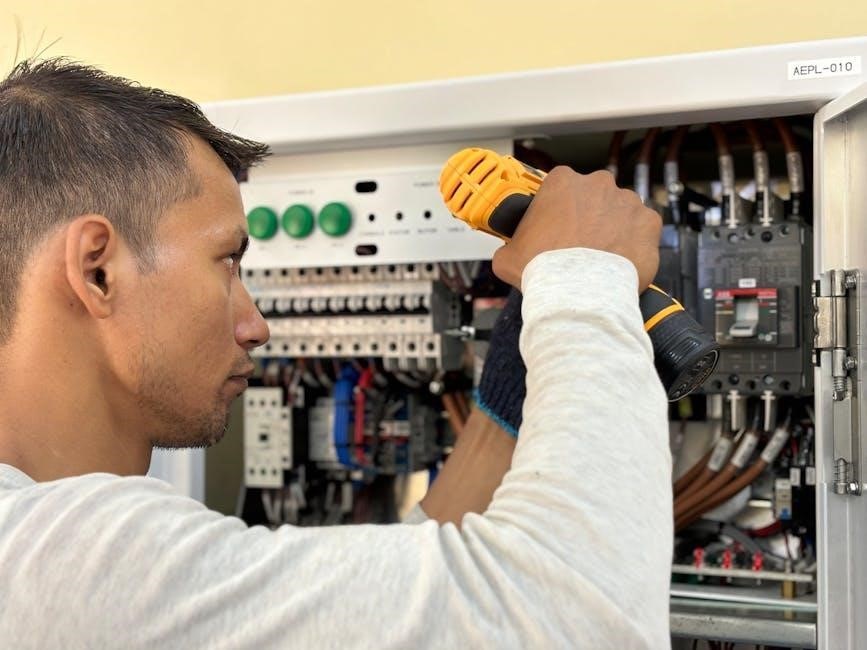
Configure the PowerFlex 4M using the drive keypad or Drive Explorer software, adjusting parameters for specific applications and optimizing performance through programming.
Master parameter settings for Volts/Hertz control and slip compensation, ensuring precise motor control and efficient operation tailored to your needs.
Using the Drive Keypad
The PowerFlex 4M drive keypad provides a user-friendly interface for local control, configuration, and monitoring without requiring a computer connection. Navigating the keypad involves utilizing the display, arrow keys, and Enter/Esc buttons to access various menus and parameters.
Key functions include starting and stopping the drive, adjusting speed and frequency, viewing drive status, and accessing fault information. The keypad allows for direct parameter programming, enabling adjustments to settings like acceleration and deceleration times, motor nominal voltage, and current limits.
To access parameters, use the keypad to navigate to the “Programming” menu, then enter the parameter number. The display will show the current value, which can be modified using the arrow keys and saved with the Enter button. Remember to consult the full manual for detailed parameter descriptions and appropriate settings for your application. The keypad is invaluable for initial setup and quick adjustments in the field.
Drive Explorer Software Overview
Rockwell Automation’s Drive Explorer software is a powerful, PC-based tool for configuring, programming, and monitoring PowerFlex 4M drives. It offers a graphical user interface, simplifying complex tasks and providing advanced functionality beyond the drive keypad.
Drive Explorer facilitates parameter uploads and downloads, allowing for easy backup and restoration of drive configurations. It supports offline programming, enabling development of drive settings without a live connection to the drive. The software also provides robust diagnostic capabilities, including fault tracing and real-time performance monitoring.
Users can create and manage multiple drive projects, streamlining configuration for multiple drives in a system. The software’s intuitive interface and comprehensive help files make it accessible for both novice and experienced users. A hands-on lab experience utilizing Drive Explorer is recommended for full familiarity with its capabilities.
Parameter Programming Basics
Parameter programming within the PowerFlex 4M drive allows for precise control and customization of drive behavior. Accessing parameters can be done via the drive keypad or through Drive Explorer software, offering flexibility in configuration.
Parameters are organized into groups, categorized by function, such as motor parameters, speed control, and input/output assignments. Understanding these groupings is crucial for efficient navigation and modification. Key parameters include motor voltage, frequency, and current limits, ensuring safe and optimal operation.
Programming involves modifying parameter values to suit specific application requirements. For example, adjusting the Volts per Hertz ratio optimizes motor performance. Careful consideration of parameter interactions is essential to avoid unintended consequences and ensure stable drive operation.
Volts per Hertz (V/Hz) Control
Volts per Hertz (V/Hz) control is a fundamental method for adjusting motor speed in the PowerFlex 4M drive. This technique maintains a constant ratio between the applied voltage and frequency, ensuring optimal motor torque and preventing saturation.
The drive automatically adjusts voltage proportionally to frequency, providing smooth speed control across the motor’s operating range. Key parameters within V/Hz control include the maximum frequency, voltage boost, and acceleration/deceleration times.
Proper V/Hz configuration is crucial for matching the drive to the motor’s characteristics and application demands. Adjusting these parameters allows for fine-tuning performance, minimizing energy consumption, and extending motor lifespan. It’s a versatile method suitable for a wide range of applications.
Slip Compensation Configuration
Slip compensation enhances the performance of the PowerFlex 4M drive by automatically adjusting the output frequency to maintain desired motor speed under varying load conditions. As load increases, motor slip – the difference between synchronous and actual rotor speed – increases, causing a speed drop.
Slip compensation counteracts this effect by increasing the output frequency, effectively “pulling” the motor speed back to the setpoint. Configuring slip compensation involves setting parameters related to motor slip, typically expressed as a percentage.
Accurate slip compensation improves speed regulation, enhances torque capability, and minimizes speed droop, particularly in applications with fluctuating loads. Proper configuration requires understanding the motor’s slip characteristics and the specific demands of the application.
Communication Protocols
The PowerFlex 4M supports diverse communication, including RS485/DSI, DeviceNet, EtherNet/IP, and PROFIBUS DP, enabling network integration and remote control capabilities.
Adapters for BACnet, LonWorks, and Bluetooth further expand connectivity, facilitating seamless integration into various automation systems and architectures.
RS485/DSI Communication
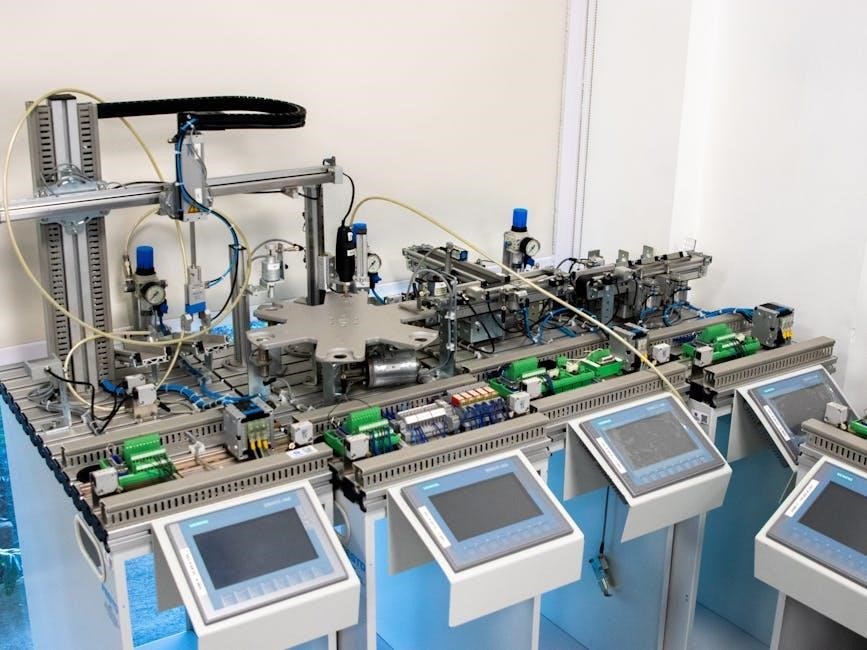
The integrated RS485/DSI port on the PowerFlex 4M drive provides a robust and versatile communication pathway for multi-drive networking and basic control. This serial communication interface utilizes a two-wire twisted pair cable, enabling simple and cost-effective connection to a network of drives or a central control system.
Drive Serial Interface (DSI) is a Rockwell Automation proprietary protocol, while RS485 is an industry-standard communication protocol. The PowerFlex 4M seamlessly supports both, offering flexibility in network design. Configuration involves setting the drive’s node address and communication parameters, such as baud rate and parity, to ensure proper data transmission.
Through RS485/DSI, you can monitor drive status, adjust parameters, and issue start/stop commands remotely. This is particularly useful for applications requiring coordinated control of multiple motors or centralized monitoring of drive performance. Proper termination resistors are crucial for reliable communication on longer cable runs, preventing signal reflection and ensuring data integrity. Detailed configuration instructions and troubleshooting tips are available in the drive’s comprehensive documentation.
DeviceNet Communication
The PowerFlex 4M drive supports DeviceNet communication via an optional communication card, enabling integration into larger industrial automation networks utilizing the Allen-Bradley DeviceNet protocol. DeviceNet provides a robust and reliable means of exchanging data between the drive and a programmable logic controller (PLC) or other DeviceNet-enabled devices.
Implementing DeviceNet communication requires installing the appropriate DeviceNet adapter card into the drive and configuring the drive’s DeviceNet parameters, including node address and communication speed. A DeviceNet scanner, typically integrated within a PLC, is then used to discover and communicate with the drive.
Through DeviceNet, you can read drive status information, such as speed, current, and fault codes, and write commands to control the drive’s operation. This allows for seamless integration of the drive into complex automation systems, enabling coordinated control and monitoring of multiple devices. Detailed configuration guidelines and troubleshooting procedures are outlined in the drive’s documentation.
EtherNet/IP Communication
The PowerFlex 4M drive offers EtherNet/IP communication capabilities through the installation of a compatible EtherNet/IP communication card, facilitating integration into modern industrial Ethernet networks. This protocol allows for high-speed data exchange between the drive and a PLC, HMI, or other EtherNet/IP-enabled devices, enabling advanced control and monitoring functionalities.
Configuring EtherNet/IP communication involves assigning a unique IP address to the drive, setting up communication parameters, and establishing connections with other network devices. Rockwell Automation’s Studio 5000 Logix Designer software is commonly used for configuring EtherNet/IP networks and integrating the PowerFlex 4M drive.
Via EtherNet/IP, users can access a wide range of drive data, including real-time performance metrics, diagnostic information, and control parameters. This enables remote monitoring, advanced diagnostics, and coordinated control within a larger automation system, enhancing overall system efficiency and reliability.
PROFIBUS DP Communication
The PowerFlex 4M drive supports PROFIBUS DP communication via an optional PROFIBUS DP communication card, enabling seamless integration into PROFIBUS networks commonly found in European industrial automation systems. This protocol allows for robust and reliable data exchange between the drive and a PROFIBUS master device, such as a PLC.
Configuration of PROFIBUS DP involves setting the drive’s node address, baud rate, and other communication parameters to match the network configuration. A GSD file, specific to the PowerFlex 4M drive, is required for the PROFIBUS master to recognize and communicate with the drive.
Through PROFIBUS DP, users can achieve synchronized motion control, remote monitoring of drive status, and efficient data transfer for diagnostics and parameter adjustments, optimizing performance and minimizing downtime within the industrial environment.

Operation and Monitoring
This section details starting, stopping procedures, and real-time drive status monitoring, alongside comprehensive fault diagnostics and effective troubleshooting techniques.
Understanding common fault codes and proper reset procedures ensures efficient operation and minimizes downtime for optimal system performance.
Starting and Stopping the Drive
Initiating operation of the PowerFlex 4M drive involves several methods, including utilizing the drive’s keypad, external start/stop signals, or commands transmitted via communication networks like DeviceNet or EtherNet/IP. Before starting, verify all wiring connections are secure and that the motor is free to rotate without obstruction.
The drive offers configurable acceleration and deceleration rates to control the motor’s ramp-up and ramp-down speeds, minimizing mechanical stress. Stopping the drive can be achieved through similar methods – keypad control, external signals, or network commands.
Different stop modes are available, including ‘Quick Stop’ for immediate deceleration and ‘Controlled Stop’ for a gradual deceleration to a complete halt. Proper configuration of these parameters is crucial for application-specific requirements. Always consult the manual for detailed instructions on configuring start/stop functionality and safety interlocks to ensure safe and reliable operation.
Monitoring Drive Status
The PowerFlex 4M drive provides comprehensive status monitoring capabilities through its integrated keypad display and via communication networks. The keypad displays real-time parameters such as motor speed, output frequency, current draw, and voltage levels, offering immediate insight into drive performance.
Drive Explorer software allows for detailed monitoring and data logging, enabling in-depth analysis of drive operation. Key parameters to monitor include motor current, DC bus voltage, and drive temperature, as deviations can indicate potential issues.
Regular monitoring helps identify trends, predict maintenance needs, and optimize system efficiency. The drive also features diagnostic indicators and fault codes, providing valuable information for troubleshooting. Consistent monitoring ensures reliable operation and minimizes downtime.
Fault Diagnostics and Troubleshooting
The PowerFlex 4M drive incorporates robust fault diagnostics to quickly identify and address operational issues. When a fault occurs, the drive’s display presents a specific fault code, accompanied by a descriptive message, guiding users towards the source of the problem.
Common fault codes relate to overcurrent, overvoltage, undervoltage, motor overload, and communication errors. The manual provides a detailed list of fault codes and recommended corrective actions. Resetting the drive often resolves transient faults, but persistent issues require further investigation.
Troubleshooting steps include verifying wiring connections, checking motor parameters, and examining application settings. Utilizing Drive Explorer software aids in advanced diagnostics and parameter analysis. Proper fault diagnosis minimizes downtime and ensures reliable operation.
Common Fault Codes
The PowerFlex 4M drive utilizes a comprehensive fault code system for efficient troubleshooting. Frequent codes include Fault 1 (Overcurrent), indicating excessive motor current, often due to overload or wiring issues. Fault 2 (Overvoltage) signals input voltage exceeding safe limits, potentially damaging the drive.
Fault 3 (Undervoltage) signifies insufficient input voltage, hindering drive operation. Fault 4 (Motor Overload) suggests the motor is drawing excessive current for an extended period. Fault 8 (Drive Over Temperature) indicates the drive is overheating, requiring improved ventilation.
Fault 10 (Communication Fault) points to issues with network communication. Detailed descriptions and corrective actions for each code are available in the drive’s manual. Addressing these common faults promptly ensures optimal performance and prevents further damage.
Resetting the Drive
Resetting the PowerFlex 4M drive is crucial after addressing a fault condition to restore normal operation. A simple Stop/Reset command via the drive keypad initiates a restart, clearing many faults. However, some faults require power cycling – completely removing and reapplying power to the drive.
Before resetting, always identify and correct the underlying cause of the fault. Repeated resets without resolution can indicate a persistent problem. Utilize the Drive Explorer software for advanced diagnostics and fault logging. Ensure proper motor and wiring connections are verified.
Refer to the drive’s manual for specific reset procedures for different fault codes. Incorrect resetting can lead to further issues. A controlled reset ensures safe and reliable operation of the PowerFlex 4M drive.
Advanced Features
Explore energy optimization, application-specific settings, and remote control options within the PowerFlex 4M drive for enhanced performance and tailored control solutions.
Energy Optimization Techniques
The PowerFlex 4M drive offers several techniques to minimize energy consumption and reduce operational costs. Utilizing Volts per Hertz (V/Hz) control and advanced slip compensation, the drive efficiently matches motor speed to application demands, avoiding unnecessary energy expenditure.
Optimizing drive parameters for specific loads and processes further enhances energy savings. Implementing features like automatic energy optimization mode allows the drive to dynamically adjust voltage and frequency, minimizing losses.
Furthermore, the drive’s ability to control motor acceleration and deceleration rates reduces peak demand charges. By leveraging these techniques, users can significantly lower their energy bills and contribute to a more sustainable operation, while also reducing mechanical wear and tear on connected equipment.
Application-Specific Settings
The PowerFlex 4M drive excels through its adaptability, offering tailored settings for diverse applications. Beyond standard V/Hz and slip compensation, the drive supports specialized configurations for pumps, fans, and conveyors.
Dedicated parameters optimize performance for constant torque, variable torque, and auto-tuning applications. These settings refine motor control, enhancing efficiency and responsiveness.
Users can customize acceleration/deceleration ramps, current limits, and overload protection to match specific process requirements. The drive’s flexibility extends to supporting various feedback devices and communication protocols, ensuring seamless integration into existing automation systems. This adaptability maximizes performance and minimizes downtime across a broad spectrum of industrial applications.
Remote Control Options
The PowerFlex 4M drive provides extensive remote control capabilities, enhancing operational flexibility and integration within larger automation systems. Utilizing the integral RS485/DSI port, multi-drive networking becomes readily achievable, simplifying control and monitoring.
Optional communication cards expand connectivity to include DeviceNet, EtherNet/IP, ControlNet, PROFIBUS DP, BACnet, LonWorks, and even Bluetooth adapters.
These options enable seamless integration with PLCs, HMIs, and other control devices, allowing for centralized monitoring, parameter adjustments, and advanced control strategies. Drive Explorer software facilitates remote programming and diagnostics, minimizing downtime and maximizing efficiency. This comprehensive suite of remote control options empowers users to optimize performance and streamline operations.
Leave a Reply
You must be logged in to post a comment.