Understanding Iliotibial (IT) Band Syndrome
Iliotibial Band Syndrome is a frequent cause of knee pain, particularly among runners, manifesting as soreness on the knee’s outer side, or tightness in the thigh.
The IT band, a thick tissue, extends from the pelvis to the knee, and discomfort often arises during downhill running or stair descent, impacting activity levels.
This condition affects a quarter of adults experiencing knee pain, and identifying the source of discomfort—whether in the thigh or around the knee—is crucial for effective management.
What is the Iliotibial Band?
The iliotibial (IT) band is a robust, fibrous band of connective tissue that journeys along the outside of the thigh, extending from the hip to just below the knee. It isn’t a muscle itself, but rather a thick tendon – a strong, elastic tissue connecting muscles to bone. Specifically, it originates at the iliac crest of the pelvis and runs down the length of the thigh, attaching near the outer side of the shinbone (tibia).
This band plays a crucial role in stabilizing the knee and hip during movement, particularly during activities like running, walking, and cycling. It assists in external rotation and abduction of the hip, and helps to prevent the knee from buckling inwards. The IT band’s function is to provide lateral support and contribute to efficient lower limb mechanics.
However, due to its length and the forces it endures, the IT band can become tight or inflamed, leading to Iliotibial Band Syndrome. Understanding its anatomy and function is key to comprehending why this condition develops and how to effectively address it. It’s a superficial structure, meaning it lies close to the skin’s surface, making it palpable to the touch.
Causes of IT Band Syndrome
IT Band Syndrome typically arises from repetitive friction between the iliotibial band and the lateral femoral epicondyle – the bony prominence on the outer side of the knee. This friction causes inflammation and pain. Several factors contribute to this, often working in combination.
Overuse is a primary culprit, particularly in activities involving repetitive knee bending, like running, cycling, and hiking. Increasing training intensity or duration too quickly can overload the IT band. Anatomical factors, such as leg length discrepancies, foot pronation, or muscle imbalances (weak hip abductors or external rotators), can also play a role.
Poor biomechanics, including improper running form or inadequate warm-up routines, exacerbate the issue. Tightness in the IT band itself, as well as surrounding muscles like the tensor fasciae latae (TFL) and quadriceps, can increase friction. Running downhill or on uneven surfaces also places greater stress on the IT band, predisposing individuals to this painful condition.
Common Symptoms of IT Band Syndrome
IT Band Syndrome typically presents as pain on the outer side of the knee, often described as aching or burning. This pain may radiate up the thigh, though the discomfort is usually most intense directly over the lateral femoral epicondyle. Initially, pain might only occur during or immediately after activity, but it can worsen over time.
A common symptom is a feeling of tightness or snapping sensation along the outer thigh. Pain often intensifies during activities like running downhill, descending stairs, or prolonged cycling. Some individuals experience pain even when walking. The area around the knee might also be tender to the touch.

As the condition progresses, pain can become constant and interfere with daily activities. Swelling or inflammation may be present, but it’s not always noticeable. A slight tightness in the thigh is often an early indicator, preceding more significant knee pain. Ignoring these early symptoms can lead to chronic discomfort.
Diagnosing IT Band Syndrome
Diagnosis involves a physical exam to assess pain location and tenderness, alongside ruling out other knee issues. Identifying pain during activity is key for accurate assessment.
Physical Examination Techniques
A thorough physical examination is central to diagnosing IT band syndrome, focusing on pinpointing the source of pain and replicating the symptoms. Healthcare professionals will typically palpate, or physically examine, along the entire length of the iliotibial band, from its origin at the hip to its insertion point just below the outer knee.
Tenderness upon palpation is a significant indicator, often felt over the lateral femoral epicondyle – the bony prominence on the outside of the knee. The examiner will also assess for pain reproduction during specific movements. These include flexing and extending the knee, particularly while the leg is internally rotated.
Specific tests, like the Ober’s test, are employed to evaluate the tightness of the IT band. This test involves positioning the patient on their side and passively abducting and extending the hip. Limited range of motion and pain suggest IT band tightness; Observing the patient’s gait and functional movements, such as walking, running, or descending stairs, can also reveal abnormalities contributing to the syndrome.
Careful observation and targeted maneuvers help differentiate IT band syndrome from other potential causes of lateral knee pain, ensuring an accurate diagnosis and appropriate treatment plan.
Ruling Out Other Conditions
Accurate diagnosis necessitates differentiating IT band syndrome from other conditions causing similar lateral knee pain. Meniscal tears, a common knee injury, can present with pain along the joint line, but often involve clicking, locking, or a feeling of instability – symptoms typically absent in IT band syndrome.
Lateral epicondylitis, or tennis elbow, can sometimes radiate pain down the thigh, mimicking IT band discomfort. However, epicondylitis is characterized by tenderness directly over the elbow’s outer bony prominence. Bursitis, inflammation of the fluid-filled sacs cushioning the knee, can also cause lateral pain, but usually presents with swelling and localized tenderness.
Stress fractures, particularly in the tibia or femur, should be considered in athletes with gradual onset of pain. Imaging studies, like X-rays or MRI, may be necessary to rule out these conditions. Referred pain from the hip or lower back can also manifest as knee pain, requiring a comprehensive assessment of these areas.
A careful medical history, combined with a thorough physical examination, is crucial for excluding these possibilities and confirming an IT band syndrome diagnosis.
Stretches for IT Band Syndrome Relief
Targeted stretches can alleviate IT band syndrome discomfort, focusing on the hip flexors and quadriceps to improve flexibility and reduce tension around the knee joint.
IT Band Stretch ─ Standing
To perform a standing IT band stretch, begin by standing upright with your affected side facing a wall or stable support for balance. Cross the leg opposite the tight IT band behind your affected leg.
Lean gently towards the affected side, reaching your arm overhead and slightly across your body to increase the stretch along the outer thigh. You should feel a gentle pull along the outside of your hip and thigh.
Hold this position for approximately 20-30 seconds, ensuring you maintain a straight back and avoid bending at the waist. Breathe deeply throughout the stretch, allowing your muscles to relax.
Repeat this stretch 2-3 times on each side, even if you only experience symptoms on one leg, to maintain balanced flexibility. Avoid bouncing or jerking movements, as this can exacerbate the condition.
This stretch targets the iliotibial band and surrounding muscles, helping to improve flexibility and reduce the tightness that contributes to IT band syndrome. Consistency is key for noticeable results.
IT Band Stretch ─ Lying Down
For a lying IT band stretch, lie on your side with your affected leg extended straight and your other leg bent for stability. Position yourself so your hip is slightly behind your body, creating a gentle angle.
Reach across your body with the arm on the same side as the extended leg, and gently pull your thigh towards your chest. You should feel a stretch along the outer thigh and hip of the extended leg.
To deepen the stretch, slightly rotate your torso away from the extended leg, reaching further across your body. Hold this position for 20-30 seconds, breathing deeply and relaxing into the stretch.
Repeat this stretch 2-3 times on each side, ensuring a controlled and gentle movement. Avoid any sharp or sudden pulls, which could worsen discomfort. Focus on maintaining proper form.
This lying stretch effectively targets the IT band, promoting flexibility and alleviating tightness. Regular performance can contribute to reducing pain and improving range of motion, aiding recovery.
Hip Flexor Stretches
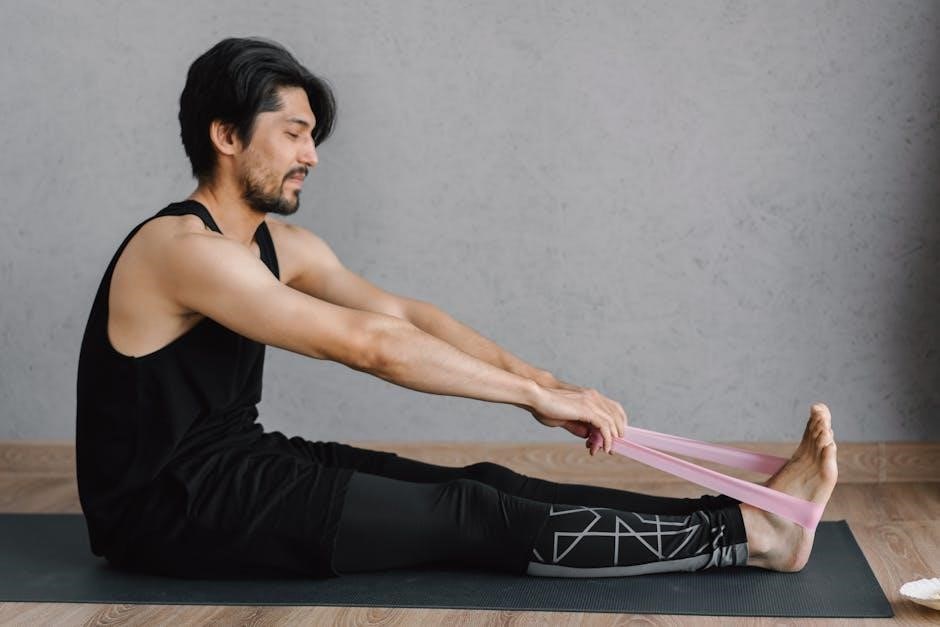
Tight hip flexors often contribute to IT band syndrome, so incorporating stretches is crucial. A common stretch involves kneeling on one knee, with the other foot flat on the floor in front of you.
Gently push your hips forward, maintaining a straight back and engaging your core. You should feel a stretch in the front of the hip of the kneeling leg. Avoid arching your lower back excessively.
Another variation is the standing hip flexor stretch. Stand tall and step one leg forward, bending the knee to 90 degrees. Keep your back straight and gently lean forward, feeling the stretch.
Hold each stretch for 20-30 seconds, repeating 2-3 times on each side. Remember to breathe deeply throughout the exercise, promoting relaxation and maximizing the stretch’s effectiveness.
Regularly stretching your hip flexors helps restore proper muscle balance, reducing strain on the IT band and alleviating associated knee pain. Consistency is key for noticeable improvements.
Quadriceps Stretches
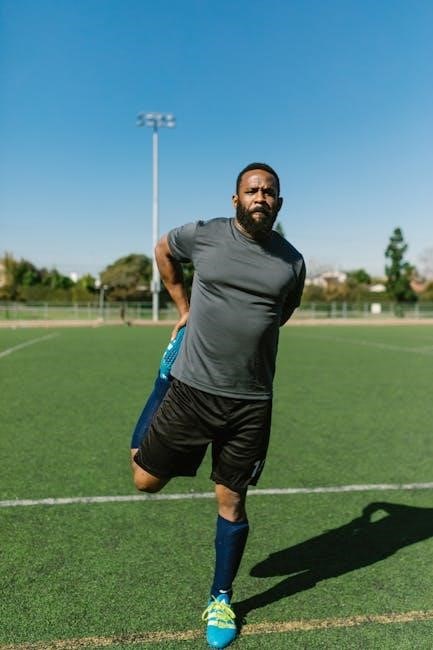
Quadriceps tightness can exacerbate IT band syndrome, making stretching this muscle group essential for relief. A classic quadriceps stretch involves standing and holding onto something for balance.
Bend one knee, bringing your heel towards your buttock. Reach back with the same-side hand and gently pull your foot closer to your glutes, feeling a stretch in the front of your thigh.
Maintain a straight back and avoid arching. Another effective stretch is lying prone (on your stomach) and performing the same heel-to-buttock pull, using your hand for assistance.
For a deeper stretch, consider using a strap or towel looped around your foot if you have difficulty reaching. Hold each stretch for 20-30 seconds, repeating 2-3 times per leg.
Consistent quadriceps stretching improves flexibility and reduces tension, lessening the pull on the IT band and contributing to decreased knee pain and improved overall function.
Additional Treatment Options
Beyond stretching, foam rolling and strengthening exercises are vital. These techniques address muscle imbalances and improve flexibility, aiding recovery from IT band syndrome effectively.
Foam Rolling Techniques

Foam rolling is a self-myofascial release technique beneficial for IT band syndrome, helping to alleviate tension and improve flexibility. Begin by positioning yourself with the foam roller under your outer thigh, supporting your weight with your hands.
Slowly roll from just above the knee to the upper thigh, pausing on tender spots for approximately 30 seconds. This process helps break up adhesions and restore proper muscle function. Remember to maintain controlled movements and avoid rolling directly over the knee joint.
Consistent foam rolling, several times a day, can significantly reduce IT band tightness and associated pain. Combining foam rolling with stretching and strengthening exercises provides a comprehensive approach to managing and preventing IT band syndrome. Focus on areas of discomfort, and adjust pressure as needed.
Proper technique is crucial; avoid aggressive rolling that exacerbates pain. Listen to your body and prioritize gradual improvement over immediate relief. This self-care method empowers individuals to actively participate in their recovery process.

Strengthening Exercises
Strengthening the muscles surrounding the hip and knee is vital in addressing IT band syndrome, as weakness in these areas can contribute to the condition. Hip abduction exercises, like side leg raises, strengthen the gluteus medius, crucial for stabilizing the pelvis during movement.
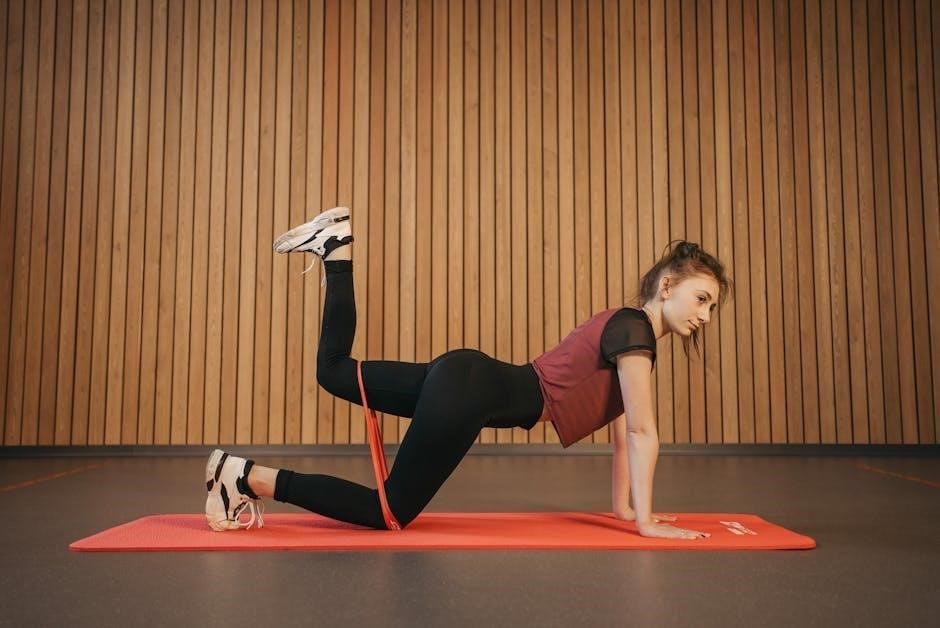
Clamshells, another excellent exercise, target the same muscle group, improving hip control and reducing stress on the IT band. Squats and lunges, performed with proper form, strengthen the quadriceps and hamstrings, providing overall knee support.
Focus on controlled movements and gradually increase resistance as strength improves. Incorporating these exercises into a regular routine, alongside stretching and foam rolling, creates a balanced approach to rehabilitation. Strengthening helps correct muscle imbalances and prevent recurrence of IT band syndrome.
Remember to consult with a physical therapist or healthcare professional to ensure proper form and tailor exercises to your specific needs. Consistent effort yields long-term benefits.
Preventing IT Band Syndrome
Proper warm-up and cool-down routines are essential, alongside analyzing running form to identify and correct biomechanical issues that contribute to IT band stress.
Proper Warm-up and Cool-down
Prioritizing a thorough warm-up before physical activity is paramount in preventing Iliotibial (IT) Band Syndrome. A dynamic warm-up, incorporating movements like leg swings, high knees, and butt kicks, prepares the muscles and tissues for exertion, increasing blood flow and flexibility.
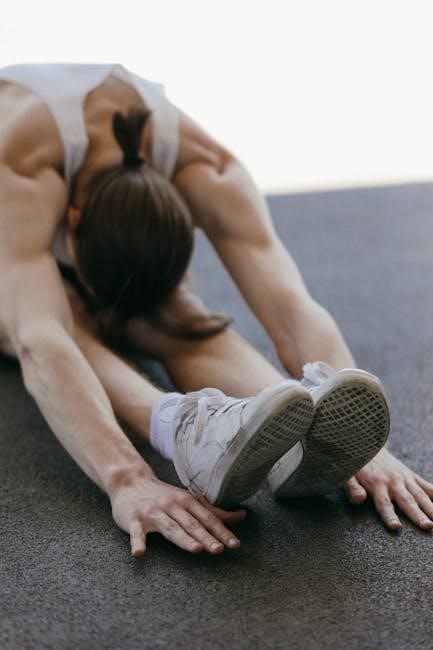
This enhanced readiness reduces the likelihood of strain on the IT band during activity. Equally crucial is a dedicated cool-down period post-exercise. Static stretches, held for 20-30 seconds, help to gradually decrease muscle tension and improve flexibility.
Focusing on stretches targeting the hip flexors, quadriceps, and hamstrings complements IT band care. Ignoring these essential phases increases the risk of tightness and inflammation, potentially leading to the development of IT Band Syndrome. Consistent implementation of both warm-up and cool-down routines forms a proactive approach to injury prevention, allowing for sustained participation in desired activities without debilitating pain.
Running Form Analysis
A professional running form analysis can be incredibly beneficial in identifying biomechanical factors contributing to Iliotibial (IT) Band Syndrome. Overstriding, for instance, places increased stress on the IT band, while improper foot strike can exacerbate the issue.
Experienced analysts observe gait patterns, assessing stride length, cadence, and pelvic stability. Correcting these elements can significantly reduce the load on the IT band. Common recommendations include shortening stride length, increasing cadence (steps per minute), and maintaining a neutral pelvic position.
Furthermore, addressing muscle imbalances – such as weak glutes or tight hip abductors – is crucial. Targeted exercises, prescribed based on the analysis, strengthen supporting muscles and improve overall biomechanics. Ignoring form flaws perpetuates the cycle of strain and inflammation. Investing in a running form analysis is a proactive step towards preventing IT Band Syndrome and optimizing running efficiency.
Leave a Reply
You must be logged in to post a comment.