
Craftsman Snow Thrower Manual: A Comprehensive Guide
This manual unlocks the full potential of your Craftsman snow thrower‚ detailing features and functions for safe‚ effective winter operation and maintenance.
Welcome to the world of efficient snow removal! This section introduces you to your new Craftsman snow thrower‚ designed for reliable performance during harsh winter conditions. We understand the importance of a clear and safe pathway‚ and this machine is built to deliver just that.
This comprehensive manual serves as your guide to understanding all aspects of your snow thrower‚ from initial setup and operation to regular maintenance and troubleshooting. We’ll cover everything you need to know to maximize its lifespan and ensure optimal functionality.
Before you begin‚ please take the time to thoroughly read this manual. Familiarizing yourself with the controls‚ safety precautions‚ and maintenance procedures will contribute to a safe and enjoyable snow removal experience. Let’s get started!
Understanding Model Numbers & Serial Numbers
Locating your Craftsman snow thrower’s model and serial number is crucial for accurate parts identification‚ warranty claims‚ and accessing specific support resources. These numbers provide vital information about your machine’s specifications and manufacturing date;

The model number typically indicates the features and capabilities of your snow thrower‚ while the serial number uniquely identifies your specific unit; You’ll find these numbers on a decal usually affixed to the snow thrower’s frame‚ often near the engine or auger housing.
Record these numbers in a safe place for future reference. When contacting customer support or ordering replacement parts‚ having this information readily available will expedite the process and ensure you receive the correct components for your model.
Safety First: Important Precautions
Operating a snow thrower involves inherent risks; prioritizing safety is paramount. Always read and understand this entire manual before assembly or operation. Never allow untrained individuals to use the machine. Keep children and pets well clear of the operating area at all times.
Wear appropriate safety gear‚ including eye protection‚ sturdy gloves‚ and non-slip footwear. Avoid loose clothing that could become entangled in moving parts. Never operate the snow thrower without all guards and shields in place and functioning correctly. Be mindful of your surroundings and potential hazards like traffic or uneven terrain.
Always disconnect the spark plug before performing any maintenance or repairs.
General Safety Rules
Maintain a safe operating distance from bystanders‚ ensuring no one is within the throwing range of the snow stream. Never point the discharge chute towards people‚ animals‚ or property. Thoroughly inspect the work area for obstacles like rocks‚ toys‚ or hidden objects before starting the machine.
Avoid operating on steep slopes as this can lead to loss of control. If operation on a slope is unavoidable‚ proceed slowly and cautiously. Never attempt to clear debris other than snow; the machine is designed specifically for snow removal. Be aware of potential electrical hazards when operating near power lines.

Always shut off the engine before leaving the operating position or making any adjustments.
Pre-Operation Safety Checks
Before each use‚ inspect the auger and impeller for any damage or obstructions. Ensure all bolts and screws are tightened securely to prevent vibration-related issues. Check the oil level and add if necessary‚ using the recommended type specified in this manual. Verify the fuel tank contains sufficient fuel and that the fuel cap is tightly closed.
Confirm the control panel functions correctly‚ including the auger engagement and drive controls. Inspect the shear pins for wear and replace if needed. Ensure the scraper bar is properly adjusted and in good condition. Finally‚ visually inspect the entire machine for any leaks or unusual wear patterns.
During Operation Safety Guidelines
Never place hands or feet near the rotating auger and impeller while the engine is running. Maintain a safe distance from the snow thrower during operation‚ and ensure bystanders are clear of the discharge area. Avoid throwing snow towards roadways or public areas where it could create a hazard.
If the auger becomes clogged‚ shut off the engine completely and disconnect the spark plug wire before attempting to clear the blockage. Do not operate the snow thrower at excessive speeds‚ and be mindful of uneven terrain. Regularly check for accumulating snow buildup around the machine‚ and address it promptly to maintain optimal performance.

Assembly & Initial Setup
Begin by carefully unboxing all components‚ verifying against the inventory list. Proper assembly ensures optimal performance and longevity of your Craftsman snow thrower.
Unboxing and Inventory
Carefully unpack your new Craftsman snow thrower‚ taking time to inspect the carton for any shipping damage before opening. Once opened‚ lay out all components on a protected surface – a drop cloth or cardboard is ideal – to prevent scratching.
Cross-reference each part with the detailed parts list included in this manual. This inventory ensures you have everything necessary for successful assembly. Note any missing or damaged parts immediately and contact customer support for replacements.
Pay close attention to smaller components like hardware (bolts‚ nuts‚ washers) often packaged in separate bags. Keep these organized to streamline the assembly process. Retain the packaging materials for potential return shipping if needed. A thorough unboxing and inventory are crucial first steps!
Handle Assembly Instructions
Begin by attaching the upper and lower handle sections using the provided bolts and washers. Ensure proper alignment before fully tightening – misaligned handles can affect control. Refer to the diagram for correct bolt placement; typically‚ these are secured with a wrench or socket set.
Next‚ connect the control cables to the handle‚ ensuring smooth operation of the speed selector and chute controls. These cables often clip or screw into designated slots. Verify free movement without binding.
Finally‚ install any handle grips or padding for enhanced comfort during operation. Securely fasten these to prevent slippage. Double-check all connections for tightness before proceeding. A properly assembled handle provides optimal control and user experience.
Auger Housing Installation
Carefully position the auger housing beneath the main snow thrower body‚ aligning the mounting brackets. Utilize the provided hardware – bolts‚ washers‚ and potentially locking nuts – to secure the housing firmly in place. Ensure the auger blades are free to rotate before fully tightening all fasteners.
Double-check the alignment of the housing with the scraper bar; proper alignment is crucial for effective snow removal. A misaligned housing can lead to uneven clearing or damage to the machine.
Finally‚ inspect the shear pins within the auger assembly. These are designed to break under excessive stress‚ protecting the engine. Confirm they are correctly installed and readily replaceable.
Scraper Bar Adjustment
Proper scraper bar adjustment is vital for a clean snow removal path. Begin by loosening the adjustment bolts located near the scraper bar mounting points. The goal is to maintain consistent contact between the scraper bar and the surface you’re clearing‚ without excessive drag.
Adjust the bar’s height so it slightly contacts the ground. Too high‚ and snow will be left behind; too low‚ and it will impede auger rotation. Regularly inspect the scraper bar for wear and tear‚ replacing it when necessary to prevent damage to underlying surfaces.
Retighten the adjustment bolts securely after each adjustment‚ ensuring the bar remains firmly in place during operation.

Operating Your Snow Thrower
Mastering operation ensures efficient snow removal. Understand starting procedures‚ control panel functions‚ chute adjustments‚ and speed selection for optimal performance and safety.
Starting the Engine (Electric Start)
Before attempting an electric start‚ ensure the snow thrower is on a level surface and the auger is disengaged. Verify the ignition switch is in the “OFF” position. Plug the snow thrower into a grounded 120V outlet – do not use an extension cord if avoidable‚ but if necessary‚ use a heavy-duty‚ outdoor-rated cord.
Press and hold the electric start button. Continue holding the button for no more than 5-10 seconds. If the engine doesn’t start‚ release the button‚ wait a few seconds‚ and try again. Repeatedly holding the button for extended periods can damage the starter motor. Once the engine starts‚ release the button immediately. Allow the engine to warm up for a few minutes before engaging the auger.
If the electric start fails‚ consult the troubleshooting section for potential issues like a weak battery or faulty starter solenoid.
Starting the Engine (Recoil Start)
For recoil starting‚ first ensure the snow thrower is on a level surface with the auger disengaged and the ignition switch set to “ON”. Engage the blade brake lever to prevent accidental starting. Locate the recoil starter handle. Gently pull the handle slowly until you feel resistance – this indicates the compression stroke.
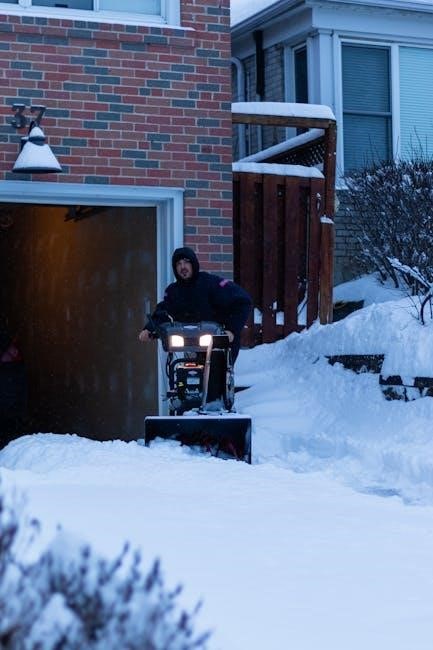
With a firm grip‚ give the recoil handle a brisk‚ full pull; Avoid letting the cord snap back; guide it gently to prevent damage. If the engine doesn’t start on the first pull‚ repeat the process. Do not flood the engine by repeatedly pulling the cord without allowing it to start.
Once started‚ slowly release the recoil handle. Allow the engine to warm up before operating.
Understanding the Control Panel
The control panel is your central hub for operating the snow thrower. Key components include the ignition switch‚ controlling power to the engine‚ and the auger engagement lever‚ activating the snow removal system. The blade brake lever immediately stops auger rotation for safety during adjustments or maintenance.
Speed control settings allow you to match the throwing speed to snow conditions – slower for deep snow‚ faster for lighter accumulations. The chute control lever directs the snow discharge direction. Familiarize yourself with each control’s function before operation.
Always disengage the auger and set the parking brake before leaving the operating position.
Adjusting the Snow Chute Direction & Deflector
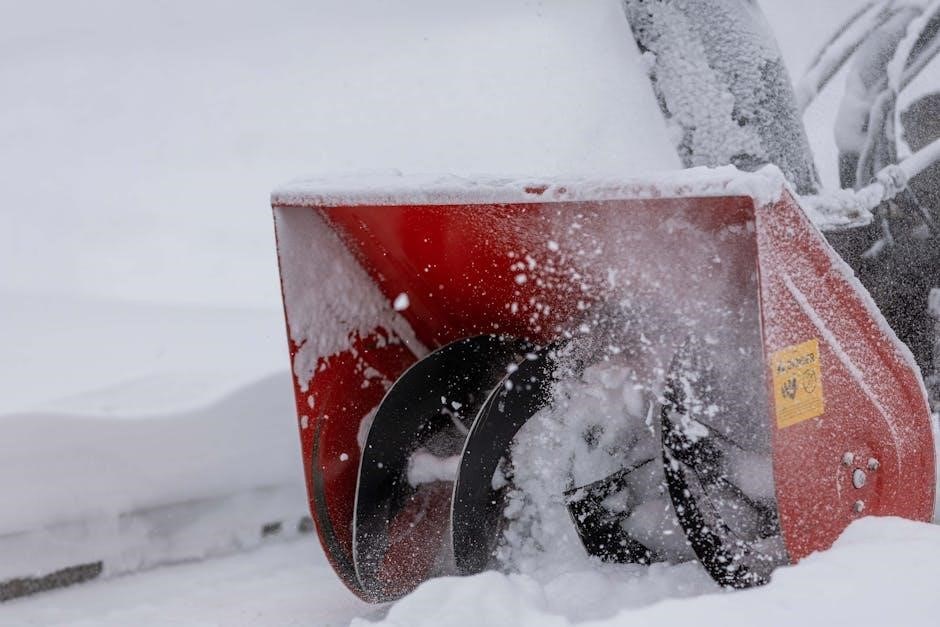
Directing the snow flow is crucial for efficient clearing. The snow chute rotates horizontally‚ controlled by a lever on the control panel‚ allowing you to aim the discharge. Never attempt to manually redirect the chute while the auger is engaged – serious injury could occur.
The deflector‚ located at the chute’s exit‚ controls the vertical angle of the snow stream. Adjust it to prevent throwing snow onto roadways or neighboring properties. Fine-tune both the chute direction and deflector for optimal throwing distance and pattern.
Regularly check for obstructions in the chute and ensure smooth rotation.
Selecting the Right Speed
Your Craftsman snow thrower features multiple speed settings to match snow conditions and your desired clearing pace. Slower speeds are ideal for deep‚ heavy snow or navigating tight spaces‚ providing greater control and preventing clogging. Higher speeds are best suited for lighter‚ fluffy snow and open areas‚ maximizing clearing efficiency.
Engage the appropriate speed before initiating the auger. Avoid sudden speed changes while operating‚ as this can strain the machine and reduce performance. Remember to disengage the drive before turning or maneuvering on slopes.
Experiment with different speeds to find what works best for your specific needs.
Maintenance & Troubleshooting
Ensure peak performance and longevity with our detailed maintenance schedule and troubleshooting guides‚ addressing common issues like starting problems and clogging.
Regular Maintenance Schedule
Maintaining your Craftsman snow thrower is crucial for reliable operation. After each use‚ inspect the auger and scraper bar for wear‚ removing any accumulated snow or debris. Before each season‚ check and tighten all bolts and fasteners.
Every 25 hours of operation‚ or annually‚ change the engine oil to ensure optimal lubrication and prevent engine damage. Inspect the spark plug and replace it if necessary. Periodically check the auger belt for cracks or wear‚ replacing it if compromised.
Before storing for the off-season‚ perform a complete inspection and maintenance routine‚ including fuel stabilization to prevent fuel degradation. Following this schedule will maximize the lifespan and performance of your snow thrower.
Oil Change Procedures
Regular oil changes are vital for engine health. First‚ warm up the engine briefly for easier oil flow. Locate the oil drain plug‚ typically underneath the engine‚ and position a drain pan. Carefully remove the plug‚ allowing the old oil to drain completely.
Once drained‚ replace the plug and tighten securely. Locate the oil fill cap and add the recommended oil type and quantity‚ as specified in your model’s documentation. Avoid overfilling.
Check the oil level with the dipstick‚ adding more if needed. Properly dispose of the used oil at a designated recycling center. This simple procedure extends engine life and ensures optimal performance.
Spark Plug Replacement
A fouled or worn spark plug can cause starting difficulties. Begin by disconnecting the spark plug wire to prevent accidental starting. Use a spark plug socket to carefully remove the old plug. Inspect the old plug for signs of wear‚ fouling‚ or damage – this helps diagnose engine issues.
Gap the new spark plug to the specification listed in your owner’s manual; a proper gap ensures efficient combustion. Carefully thread the new plug into the cylinder head by hand to avoid cross-threading.
Tighten the plug with the spark plug socket‚ following the torque specifications. Reconnect the spark plug wire securely. This ensures reliable ignition and optimal engine performance.
Shear Pin Replacement
Shear pins protect the auger and impeller from damage during obstructions like rocks or ice. When a pin shears‚ the auger stops rotating. Always disconnect the spark plug wire before attempting any repairs! Locate the sheared pin – it’s typically near the auger housing.
Use a punch and hammer to drive out the remaining pieces of the old pin. Insert the new shear pin‚ ensuring it’s properly aligned. Secure the pin with the retaining clip or bolt.
It’s recommended to keep extra shear pins on hand‚ as they are consumable items. Avoid using bolts or other substitutes‚ as they won’t provide the necessary protection.
Auger Belt Inspection & Replacement
Regularly inspect the auger belt for cracks‚ fraying‚ or excessive wear. A worn belt will slip‚ reducing throwing performance. Disconnect the spark plug wire before any inspection or replacement. Access the belt by removing the belt cover‚ typically located near the auger housing.
To remove the old belt‚ you may need to disengage the auger engagement lever and relieve tension. Install the new belt‚ ensuring it’s properly seated in the grooves of the pulleys.
Re-engage the lever and verify the belt tracks correctly. Replace the belt cover securely. Always use a belt of the correct specification for optimal performance.
Scraper Shoe Adjustment & Replacement
The scraper shoe maintains optimal contact with the surface‚ ensuring efficient snow removal. Periodically check the scraper shoe for wear and adjust its height as needed. Excessive wear reduces cleaning effectiveness and can damage the machine.
To adjust‚ locate the adjustment mechanism – often a bolt or lever – near the scraper shoe. Lower the shoe for smooth surfaces and raise it for gravel or uneven terrain.
For replacement‚ remove the old shoe by loosening the mounting hardware. Install the new shoe‚ ensuring it’s securely fastened. Proper adjustment and replacement prevent damage and maximize snow-clearing performance.
Troubleshooting Common Issues (No Start)
If your Craftsman snow thrower fails to start‚ several factors could be at play. First‚ check the fuel level and ensure the fuel valve is open. Next‚ inspect the spark plug for fouling or damage; a replacement may be necessary.
Verify the engine switch is in the “on” position and the safety bail is engaged. For electric start models‚ check the extension cord and ensure a proper power supply.
If still no start‚ examine the shear pins for breakage. A clogged carburetor can also prevent starting; cleaning may be required. Consult a qualified technician if these steps don’t resolve the issue.
Troubleshooting Common Issues (Clogging)
Experiencing clogging during operation? This is common with heavy‚ wet snow. First‚ stop the engine and disconnect the spark plug wire for safety. Inspect the auger housing for accumulated snow and ice; remove any obstructions carefully with a non-metallic tool.
Check the discharge chute for blockages‚ ensuring the deflector moves freely. Avoid throwing snow against the grain or attempting to process excessively deep drifts.
Using a snow thrower additive can help prevent ice buildup. Regularly clean the scraper bar to maintain optimal snow removal. If clogging persists‚ consult the manual for further assistance.

Parts Diagram & Resources
Locate detailed parts diagrams online to easily identify components for repair and maintenance‚ ensuring your Craftsman snow thrower remains in peak condition.
Locating Parts Diagrams Online
Accessing Craftsman snow thrower parts diagrams is now simpler than ever! Several online resources provide exploded views and detailed schematics to assist with repairs and maintenance. Begin your search at the official Sears PartsDirect website (searspartsdirect.com)‚ where you can enter your model number to find diagrams specific to your machine.
Alternatively‚ many independent parts retailers also host diagrams on their websites. A quick web search using your snow thrower’s model number followed by “parts diagram” will yield numerous results. These diagrams are invaluable for identifying the correct part numbers and understanding how components fit together‚ streamlining the repair process and minimizing downtime during crucial winter months. Remember to always double-check the diagram against your specific model;
Understanding Parts Identification
Successfully identifying parts is crucial for effective repairs. Craftsman snow thrower parts diagrams utilize a numbering system; each component is assigned a unique number corresponding to a parts list. This list provides a detailed description of the part‚ along with its official Craftsman part number.
Pay close attention to any notes or supersessions indicated on the diagram. Supersessions signify that a part has been replaced with an updated version – always use the latest part number. When ordering‚ provide the complete part number to ensure you receive the correct replacement. Familiarize yourself with common component names like shear pins‚ auger blades‚ and scraper shoes to aid in identification and communication with parts suppliers.
Where to Purchase Replacement Parts
Finding replacement parts for your Craftsman snow thrower is straightforward. Several options are available‚ offering varying levels of convenience and pricing. Authorized Craftsman dealers remain a reliable source‚ providing genuine parts and expert assistance. Online retailers specializing in outdoor power equipment parts‚ such as Sears PartsDirect and Amazon‚ offer extensive catalogs and competitive prices.
When purchasing online‚ verify the seller’s reputation and return policy. Local hardware stores may stock common parts like shear pins and scraper shoes. Always have your model number handy to ensure compatibility. Comparing prices across different vendors is recommended to secure the best deal.

Storage & Off-Season Care
Proper storage prepares your Craftsman snow thrower for the off-season‚ ensuring longevity and reliable performance when winter returns next year.
Preparing for Long-Term Storage
As the final snowfall melts‚ proper preparation is crucial for safeguarding your Craftsman snow thrower during the off-season. Begin by thoroughly cleaning the machine‚ removing all snow and ice accumulation from the auger housing‚ scraper blade‚ and chute. This prevents corrosion and ensures smooth operation next winter.
Drain the fuel tank completely to avoid fuel degradation and potential carburetor issues. Run the engine briefly after draining to consume any remaining fuel in the lines. Disconnect the spark plug wire for added safety. Apply a corrosion inhibitor to all metal surfaces. Store the snow thrower in a dry‚ covered location‚ protected from the elements. A tarp offers additional protection. Finally‚ consult your model’s specific instructions for any unique storage recommendations.
Fuel Stabilization
Protecting your fuel system is paramount during extended storage. Gasoline degrades over time‚ leading to gum and varnish buildup that can clog the carburetor and hinder starting next season. To combat this‚ utilize a fuel stabilizer specifically designed for small engines.
Add the recommended amount of fuel stabilizer to a nearly full fuel tank‚ then run the engine for approximately five to ten minutes to ensure the stabilized fuel circulates throughout the entire fuel system – including the carburetor and fuel lines. This process coats all internal components‚ preventing corrosion and maintaining optimal performance. Store fuel in an approved container in a well-ventilated area.
Leave a Reply
You must be logged in to post a comment.